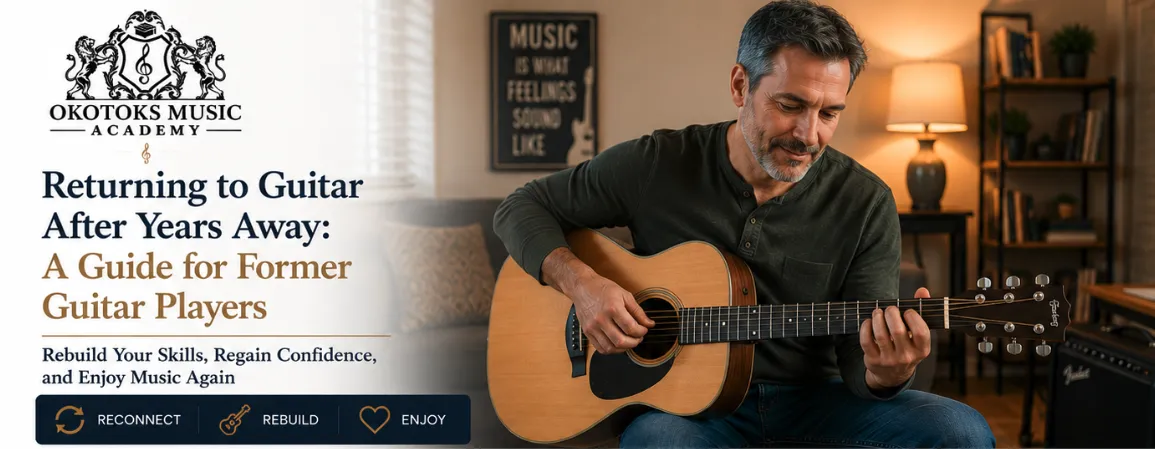
Returning to Guitar Lessons in Okotoks: Rebuild Your Skills and Enjoy Playing Again
Returning to Guitar Lessons in Okotoks:
Rebuild Your Skills and Enjoy Playing Again
A lot of people who search for guitar lessons in Okotoks are not complete beginners.
Some learned a few chords years ago. Some played in high school and then stopped. Some took lessons as kids but never got far. Some taught themselves from YouTube and hit a wall. Some adults bought a guitar, learned a few songs, then life got busy. Some seniors played years ago and would like to come back to music in a relaxed, meaningful way.
If that sounds familiar, your guitar story is not finished.
Returning to guitar can feel awkward at first. Your fingers may feel slow. Chords you once knew may seem blurry. Strumming may feel uneven. You may remember being better than you feel now. That can be frustrating.
But the good news is simple:
You can start again.
At Okotoks Music Academy, private guitar lessons can help returning students rebuild skills, regain confidence, correct old habits, and reconnect with the music they enjoy. Whether you are a teen coming back to guitar, an adult returning after years away, a senior wanting to play again, or a self-taught guitarist who wants better structure, a fresh start can make a major difference.
This guide explains what to expect when returning to guitar lessons, why people come back, and how private one-on-one instruction can help you play with more confidence.
Why People Stop Playing Guitar
Most people do not stop guitar because they are incapable of learning.
They stop because life changes, motivation fades, or the learning process becomes frustrating.
Common reasons people stop playing guitar include:
school became busy
work and family responsibilities took over
fingers hurt too much at the beginning
chord changes felt too hard
progress felt too slow
lessons did not feel personal
practice became inconsistent
the student did not know what to practice
the guitar was difficult to play
the student tried to learn online and got stuck
they did not have songs that motivated them
they felt embarrassed by slow progress
This matters because quitting once does not mean you failed.
Sometimes the timing was wrong. Sometimes the guitar was poor quality or badly set up. Sometimes the student needed a different teacher. Sometimes the lesson plan did not match the music they cared about.
Returning to guitar gives you a chance to do it differently.
Will You Remember How to Play Guitar?
Probably more than you think.
Returning guitar students are often surprised by what comes back after a few lessons. You may not remember everything immediately, but old patterns can return with review and practice.
You may remember:
how to hold the guitar
a few chord shapes
basic strumming
parts of songs
how tabs work
rhythm patterns
fingerpicking ideas
the feeling of playing
Even if you feel rusty, previous experience still matters.
You are not starting from absolute zero. You are rebuilding.
A good guitar teacher will assess what you remember, identify gaps, and help you move forward without making you feel embarrassed.
Returning Guitar Students Have an Advantage
Returning students often focus too much on what they forgot.
But you may have advantages that a brand-new beginner does not have.
You may already understand:
the names of some chords
how strumming works
what it feels like to practice
what kind of music you enjoy
what frustrated you before
what you want to do differently this time
That last point is important.
A returning student often has more clarity.
You may now know that you do not want random exercises forever. You may want to play worship music, classic rock, acoustic songs, country, blues, pop songs, or old favourites. You may want to play for yourself, your family, church, friends, or simple enjoyment.
That clarity helps a teacher build a better plan.
What Should Returning Guitar Lessons Focus On?
Returning guitar lessons should not assume everyone needs the same restart.
Some students need to review the basics. Some need to fix technique. Some need help with rhythm. Some need better practice habits. Some know songs but lack theory. Some can play chords but cannot change between them smoothly. Some are self-taught and need structure.
A good returning guitar program may include:
Refreshing Chords
You may review basic open chords, simplified chord shapes, barre chords, or chord progressions depending on your level.
Improving Chord Changes
Many returning players struggle with transitions. A teacher can help you move more efficiently and practice changes properly.
Rebuilding Strumming
Strumming is often where students feel rusty. Lessons can help rebuild steady rhythm, timing, and musical feel.
Fixing Old Habits
Self-taught or former students may have habits that slow progress. These can include poor thumb placement, excess tension, unclear rhythm, or inefficient finger movement.
Relearning Songs
Returning students often enjoy revisiting songs they used to play. This can be motivating and confidence-building.
Learning New Songs
A fresh start is also a chance to learn music you actually care about now.
Understanding Theory
Basic theory can help you understand chords, keys, capo use, scales, and song structure.
Building Confidence
Returning to guitar is not only technical. It is also emotional. A good teacher helps the student feel capable again.
Returning to Guitar as a Teen
Teens may return to guitar after stopping as children or after trying to teach themselves.
A teen might come back because they now want to play songs they like, learn electric guitar, join a worship team, write music, play with friends, or simply have a creative outlet.
Teen returning students should not be treated like little kids.
They need lessons that respect their musical interests and maturity.
A returning teen may want to work on:
acoustic songs
electric guitar riffs
chord progressions
worship songs
songwriting
fingerpicking
music theory
tabs
playing with friends
performance confidence
The key is to connect fundamentals to music the teen actually values.
A teen who quit years earlier may succeed this time because the motivation is now their own.
Returning to Guitar as an Adult
Many adults return to guitar with mixed feelings.
They may feel excited, but also self-conscious. They may say:
“I used to know a few chords.”
“I haven’t played in years.”
“I always wanted to get better.”
“I tried teaching myself but got stuck.”
“I bought a guitar and barely used it.”
“I wish I had kept going.”
These are common.
Adult returning students often benefit from a calm, practical lesson approach. You do not need pressure. You need a plan.
Adult lessons may focus on:
favourite songs
chord review
smoother strumming
rhythm accuracy
finger strength
basic theory
acoustic guitar
electric guitar
worship music
blues
country
classic rock
confidence
Returning as an adult can be more rewarding than learning as a child because you are choosing it for yourself.
Returning to Guitar as a Senior
Seniors and retirees often return to guitar because music still feels meaningful.
Maybe you played years ago. Maybe you always wanted to improve. Maybe you want to play old favourites, hymns, folk songs, country songs, or music connected to family memories.
Guitar can be a good fit for seniors when lessons are paced properly.
A senior returning student may benefit from:
lighter strings
simplified chord shapes
slower pacing
familiar songs
clear practice notes
repetition
comfortable instrument setup
patient instruction
realistic goals
The goal is not to rush. The goal is to enjoy music again while rebuilding useful skill.
For seniors searching for guitar lessons in Okotoks, private one-on-one lessons can be especially helpful because the teacher can adapt to your comfort, pace, and goals.
What If Your Fingers Hurt Again?
Finger discomfort is common when returning to guitar.
If you have not played in a while, your fingertips may need time to rebuild tolerance. Your hand muscles may also need time to adjust.
However, discomfort should be manageable.
If playing is very painful, the issue may be:
strings are too heavy
string height is too high
the guitar needs setup
the guitar is too large
you are pressing too hard
your wrist position is poor
you are practicing too long too soon
A guitar teacher can help identify the problem.
A good restart should not mean suffering through pain. It should mean building gradually.
Short, regular practice is usually better than long practice sessions that leave your hands sore.
Do Returning Players Need to Start Over?
Not always. With the help of a great teacher, you'll see faster progress.
Some students need a full review. Others only need a tune-up. Some can move forward quickly after a few weeks. Others need time to rebuild confidence.
The right starting point depends on:
how long you have been away
what you remember
what you can currently play
your rhythm skills
your chord knowledge
your technique
your goals
your instrument setup
A good teacher should not force you through material you clearly know. But they also should not skip foundations that need repair.
The goal is to start where you are, not where you think you “should” be.
Self-Taught Guitar Players: Why Lessons Can Still Help
Many returning guitar students are self-taught.
They may have learned from YouTube, apps, friends, chord charts, or trial and error. That is not a bad thing. Self-teaching shows initiative.
But self-taught players often have gaps.
Common gaps include:
weak rhythm
poor chord changes
tension
buzzing strings
unclear strumming
limited theory
no structured practice plan
difficulty playing full songs
trouble with timing
inconsistent technique
Private lessons can help clean up those issues.
The goal is not to erase what you learned. The goal is to organize it, improve it, and build on it.
For self-taught players, lessons can create a big jump in progress because the teacher can quickly identify what is holding the student back.
How Much Should Returning Guitar Students Practice?
Returning students should practice consistently, but not aggressively at first.
A good starting point is:
10 to 20 minutes per day, 4 to 5 days per week.
This is enough to rebuild skill without overwhelming your hands or schedule.
A useful practice session may include:
tuning the guitar
reviewing one chord or chord change
practicing one rhythm pattern
working slowly on one song section
playing something enjoyable
reviewing the teacher’s notes
Avoid the trap of trying to make up for lost years in one week.
You do not need to rush. You need rhythm and consistency.
Why Private Guitar Lessons Help Returning Students
Returning students benefit from personalized instruction because every restart is different.
A private guitar teacher can help you:
assess your current level
review what matters
skip what is unnecessary
fix old habits
choose suitable songs
rebuild technique
improve timing
learn chords properly
create a practice plan
regain confidence
This is especially useful if your previous attempt failed because you did not know what to practice next.
Private lessons give structure.
And for returning players, structure is often what was missing before.
Why Local Guitar Lessons in Okotoks Make Restarting Easier
Starting again requires consistency.
Local lessons make that easier.
If lessons are nearby, you are more likely to keep showing up. That matters for adults with busy schedules, teens with school commitments, and seniors who want a steady weekly rhythm.
For Okotoks families and adults searching for guitar lessons near me in Okotoks, local private lessons can make guitar feel practical again.
The goal is not to make music another stressful obligation.
The goal is to make guitar a meaningful part of your week.
Common Questions About Returning to Guitar Lessons
Will I remember how to play guitar?
You may remember more than you expect. Chords, rhythms, and songs often come back with review and practice.
Do I need to start from the beginning?
Not always. A teacher can assess your current ability and choose the right starting point.
What if I taught myself and have bad habits?
That is common. Lessons can help correct technique, rhythm, and practice habits without making you feel like you are starting from zero.
Am I too old to return to guitar?
No. Adults and seniors can return to guitar successfully. The pace can be adjusted to your goals and comfort.
Can I learn songs I actually like this time?
Yes. Returning students often do better when lessons include music they care about.
Should I use acoustic or electric guitar?
Either can work. The best choice depends on your goals, comfort, and musical taste.
How often should I take lessons?
Weekly private lessons are usually best for structure, accountability, and steady progress.
What if I quit before because I was not progressing?
A better teacher, clearer practice plan, more suitable songs, and a properly set up guitar can make a major difference.
Final Thoughts: Your Guitar Journey Is Not Over
If you used to play guitar and have thought about returning, that interest is worth paying attention to.
Maybe you miss the feeling of playing. Maybe you want to rebuild a skill you started years ago. Maybe you want to learn properly this time. Maybe you want music back in your life.
You do not need to be perfect. You do not need to remember everything. You do not need to feel embarrassed.
You just need to start again.
At Okotoks Music Academy, we offer private guitar lessons for returning students, including teens, adults, seniors, and self-taught players who want structure and support. Our goal is to help you rebuild skill, regain confidence, and enjoy music again.
Okotoks Music Academy offers private music lessons in piano, guitar, and voice for students in Okotoks and surrounding areas.
If you are ready to return to guitar lessons in Okotoks, contact Okotoks Music Academy to ask about current lesson availability.
