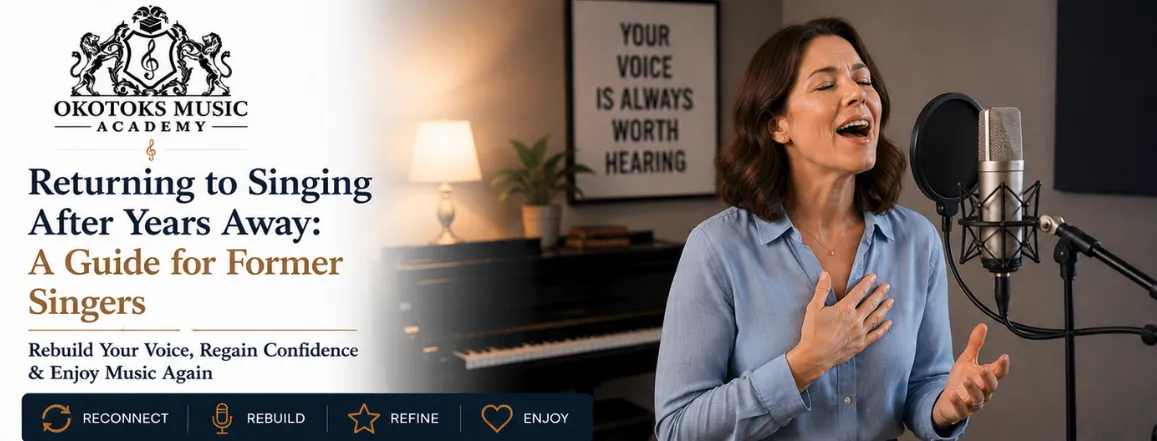
Returning to Singing Lessons in Okotoks: Rebuild Your Voice and Regain Confidence
Returning to Singing Lessons in Okotoks:
Rebuild Your Voice and Regain Confidence
Many people step away from singing for years.
Life gets busy. School ends. Choir stops. Church involvement changes. Work and family take priority. Confidence fades. Some people stop singing after one uncomfortable performance. Others were told years ago that they “couldn’t sing” and never tried again. Some used to love singing but slowly became quieter over time.
If you are searching for returning to singing lessons in Okotoks, the first thing to know is this:
Your voice is still yours.
You may feel rusty. You may feel nervous. You may not know where to begin. You may worry that your range is smaller, your breath control is weaker, or your confidence is not what it used to be.
That is normal.
At Okotoks Music Academy, private voice lessons can help returning singers rebuild technique, improve pitch, restore confidence, and reconnect with the joy of singing. Whether you are a teen returning after time away, an adult who used to sing, a senior wanting to join choir again, or someone who simply wants to feel comfortable using your voice, a fresh start can help.
This guide explains what to expect when returning to voice lessons, why people stop singing, and how private lessons can help you rebuild in a healthy, confident way.
Why People Stop Singing
Most people do not stop singing because they have no ability.
They stop for human reasons.
Common reasons people stop singing include:
they got busy
they lost confidence
they had a negative experience
they felt judged
they stopped choir or musical theatre
they left a worship team
their voice changed
they became self-conscious
they were told they were not good
they did not know how to improve
they felt nervous singing in front of others
they could not find the right teacher
they did not have a safe place to practice
Singing is personal. Criticism can feel more painful than it does with some other instruments because the voice is part of the person.
If someone criticizes your piano playing, it may feel like they criticized your skill.
If someone criticizes your singing, it can feel like they criticized you.
That is why returning to singing often involves more than technique. It also involves rebuilding trust and confidence.
Can You Start Singing Again After Years Away?
Yes.
You can return to singing after years away.
Your voice may not feel exactly the same as it once did, but that does not mean you cannot rebuild. Voices change with age, use, confidence, health, stress, and practice habits. A returning singer may need to rebuild breath support, pitch accuracy, vocal stamina, tone, and range gradually.
That is reasonable.
The goal is not to force your voice back to what it was years ago. The goal is to develop the voice you have now.
A returning singer may notice:
less vocal stamina
reduced confidence
tighter breathing
pitch uncertainty
difficulty with higher notes
less control
nervousness
old songs feeling harder
unfamiliarity with warmups
tension in the throat, jaw, or shoulders
These can often improve with careful, consistent work.
A good voice teacher will help you start from your current voice, not from an unrealistic memory of the past.
Returning Singers Have an Advantage
Returning singers often underestimate themselves.
Even if you feel rusty, you may still have useful musical memory.
You may remember:
melodies
lyrics
phrasing
choir experience
performance habits
worship songs
musical theatre songs
how music makes you feel
what styles you enjoy
what helped or hurt your confidence before
That history matters.
You may not be starting from zero. You may simply need structure, feedback, and a safe environment.
Returning singers also often have clearer goals than beginners. You may know you want to sing in choir, worship, musical theatre, casual settings, family gatherings, or simply for yourself.
That clarity helps lessons become more useful.
What Should Returning Voice Lessons Focus On?
Returning voice lessons should begin with a careful, respectful assessment.
A teacher may want to understand:
your singing history
why you stopped
what styles you enjoy
whether you have performance goals
whether you feel strain
what your range feels like now
what confidence level you have
whether you sing in choir, worship, or musical theatre
what you want to achieve
From there, lessons may focus on several areas.
Breathing
Many returning singers need to rebuild breath support. This helps the voice feel steadier and less forced.
Pitch
If you feel less accurate than before, pitch matching and ear training can help.
Range
Range may improve gradually with healthy technique. The goal is not to force high notes, but to build coordination.
Tone
Tone can become clearer and more consistent as the voice becomes freer and less tense.
Tension Reduction
Many singers hold tension in the throat, jaw, tongue, neck, or shoulders. Reducing tension can improve comfort and sound.
Confidence
Returning singers often need to rebuild comfort using their voice. That may happen slowly.
Song Choice
Songs should fit your current voice and goals. A song that was easy years ago may need to be adjusted or transposed.
Healthy Vocal Habits
If you pushed, strained, yelled, or over-sang in the past, lessons can help you build safer habits.
The goal is not perfection. The goal is healthy progress.
What If You Feel Embarrassed About Singing Again?
This is common.
Many returning singers feel embarrassed because they remember singing better in the past or because they have avoided singing for years. Some worry they will sound bad in front of a teacher. Others feel nervous because of something someone said years ago.
A good voice teacher should not shame you.
The lesson room should be a place where mistakes are expected. You are not there to prove that you already know how to sing. You are there to rebuild.
Confidence usually returns through small steps:
Singing simple exercises.
Matching pitch.
Trying short song sections.
Learning how to breathe.
Reducing tension.
Singing more comfortably.
Preparing a full song.
Choosing whether to perform or simply sing for yourself.
You do not need to rush.
The first goal is not to impress anyone. The first goal is to feel safe enough to begin.
Returning to Singing as a Teen
Teens may return to singing after stepping away from choir, musical theatre, school music, worship, or casual singing.
Sometimes teens stop because of embarrassment. Sometimes their voice changes. Sometimes school becomes busy. Sometimes they compare themselves to others and lose confidence.
Teen returning singers may want to:
rebuild confidence
prepare for auditions
sing pop songs
return to musical theatre
join choir again
sing in worship
improve range
learn microphone skills
stop feeling nervous
sing with better control
Teen voice lessons should respect both the student’s goals and the developing voice.
A teen should not be pushed too hard or made to feel ashamed of vocal changes. A good teacher can help the student work safely with their current voice while building confidence.
Returning to Singing as an Adult
Adults often return to singing with emotional baggage.
They may remember loving music but losing confidence. They may have been told not to sing. They may have stepped away after school, church, choir, or theatre ended. They may feel awkward starting again.
Adult returning singers often say:
“I used to sing, but I’m rusty.”
“I don’t know if I can still sing.”
“I want to join a choir but feel nervous.”
“I used to sing at church.”
“I want to get my confidence back.”
“I don’t want to perform. I just want to enjoy singing again.”
These are valid reasons to start.
Adult voice lessons should be respectful, practical, and focused on the student’s goals. The teacher should help you rebuild without making you feel like you are starting from nothing.
Returning to Singing as a Senior
Seniors may return to singing for many meaningful reasons.
Some want to join a choir. Some want to sing hymns or old favourites. Some want to keep music active in their lives. Some want to sing with grandchildren. Some want a weekly creative outlet.
Senior voice lessons should be gentle, clear, and supportive.
Lessons may focus on:
comfortable breathing
familiar songs
pitch confidence
clear words
vocal comfort
memory support
relaxed tone
choir preparation
singing for enjoyment
The goal is not to push the voice beyond what is healthy. The goal is to help the student use their voice with more confidence and enjoyment.
For seniors searching for voice lessons in Okotoks, private lessons can be helpful because the teacher can adapt to the student’s pace, comfort, and goals.
What If Your Voice Has Changed?
Voices change over time.
Age, hormones, health, stress, vocal use, medications, allergies, and confidence can all affect how the voice feels.
A returning singer may notice:
lower range
less stamina
breathiness
tension
reduced volume
less control
difficulty with songs that used to be easy
uncertainty around pitch
discomfort after singing
Some changes are normal. Some may need professional medical attention if there is persistent pain, hoarseness, or voice loss.
Voice lessons can help with technique, but they are not a substitute for medical care if something feels wrong.
For normal returning-singer challenges, a teacher can help you work with the voice you have now. That may include adjusting keys, choosing better songs, rebuilding breath support, and reducing tension.
Your voice does not need to sound exactly like it did years ago to be valuable.
Can Returning Singers Improve Range?
Often, yes.
Range may improve when breathing, coordination, tension, and technique improve.
But range should not be forced.
Trying to “hit high notes” by pushing harder usually creates strain. A healthier approach is to build gradually.
A teacher may work on:
gentle warmups
vowel shaping
breath control
resonance
reducing throat tension
smooth transitions
choosing appropriate keys
strengthening comfortable notes first
For returning singers, the goal is not to immediately recover every note from the past. The goal is healthy, steady rebuilding.
Voice Lessons for Returning Choir and Worship Singers
Many returning singers want to rejoin choir or worship singing.
Private voice lessons can help prepare for that.
Lessons may focus on:
pitch accuracy
blending
breath support
harmony
phrasing
microphone use
diction
range
confidence
listening skills
singing without strain
Choir and worship settings often require singers to listen carefully and adjust to others. A private teacher can help you strengthen your own voice so you feel more prepared in a group.
If you have been away from group singing for years, lessons can make the return less intimidating.
Do Returning Singers Need to Perform?
No.
Performance is optional.
Some returning singers want to perform again. Others simply want to enjoy singing privately or prepare for choir, worship, or casual settings.
Both are valid.
Voice lessons can support:
private singing at home
choir
worship
musical theatre
auditions
recitals
family events
public speaking confidence
personal enjoyment
You do not need to perform to benefit from lessons.
The main goal is to use your voice with more confidence, health, and enjoyment.
How Much Should Returning Singers Practice?
Returning singers should practice consistently, but carefully.
A realistic routine may be:
10 to 20 minutes per day, 4 to 5 days per week.
Practice should be comfortable and focused.
A good practice session may include:
gentle warmup
breathing exercise
pitch exercise
one song section
lyric review
teacher-assigned technique
comfortable singing only
Avoid over-singing. If your voice feels tired, sore, or strained, stop and let your teacher know.
The voice is part of the body. It needs both use and rest.
Private Voice Lessons vs. Trying to Restart Alone
Some returning singers try to restart by singing along with songs at home.
That can be enjoyable, but it may not fix underlying issues.
If you are singing with tension, choosing songs in the wrong key, avoiding warmups, or pushing too hard, you may become frustrated or strained.
Private voice lessons provide feedback.
A teacher can help you:
choose the right songs
find a comfortable key
rebuild breath support
improve pitch
reduce tension
build range safely
regain confidence
create a practice plan
avoid vocal strain
For returning singers, this structure can make the difference between giving up again and rebuilding successfully.
Why Local Voice Lessons in Okotoks Make Returning Easier
Returning to singing requires consistency.
Local lessons make that easier, especially with an amazing teacher at your side.
For Okotoks residents, nearby voice lessons can help singing fit into weekly life without unnecessary travel. This matters for busy families, adults, teens, and seniors.
When people search for voice lessons near me in Okotoks or singing lessons in Okotoks, they are often looking for a place where they can feel comfortable enough to start again.
That comfort matters.
A returning singer needs a teacher who is supportive, practical, and respectful.
Common Questions About Returning to Singing Lessons
Can I return to singing after years away?
Yes. Many singers return after years or even decades away. Lessons can help rebuild confidence, technique, pitch, and vocal comfort.
Will I sound the same as before?
Maybe not exactly, and that is okay. The goal is to develop your current voice in a healthy way.
Do I need to start from the beginning?
Not always. A teacher can assess what you remember and build from your current level.
What if I feel embarrassed?
That is normal. A good teacher will help you start gently and rebuild confidence step by step.
Can I improve my range again?
Often, yes. Range may improve with healthy technique, reduced tension, and consistent practice.
Can I return to choir or worship singing?
Yes. Lessons can help prepare you with pitch, breathing, confidence, diction, and blending skills.
How often should I take lessons?
Weekly private lessons are usually best for steady progress and accountability.
Is singing safe if I am older?
Singing can be safe when taught properly and practiced comfortably. Persistent pain, hoarseness, or voice loss should be checked by a medical professional.
Final Thoughts: Your Voice Is Still Worth Hearing
If you used to sing and have thought about returning, that interest matters.
Maybe you miss choir. Maybe you miss worship singing. Maybe you miss performing. Maybe you simply miss the feeling of singing without fear.
You do not need to be perfect. You do not need to sound exactly like you did before. You do not need to explain why you stopped.
You only need to begin again.
At Okotoks Music Academy, we offer private voice lessons for returning singers, including teens, adults, seniors, choir singers, worship singers, and students who want to rebuild confidence. Our goal is to help you reconnect with your voice in a healthy, supportive, one-on-one environment.
Okotoks Music Academy offers private music lessons in piano, guitar, and voice for students in Okotoks and surrounding areas.
If you are ready to return to singing lessons in Okotoks, contact Okotoks Music Academy to ask about current lesson availability.
